
The members of the cabinet committees included Union ministers from the Bharatiya Janata Party and its National Democratic Alliance partners like Janata Dal-United, Telugu Desam Party, Janata Dal-Secular, Shiv Sena and Lok Janshakti Party-Ram Vilas.

Prime Minister Narendra Modi's aircraft was escorted by Saudi F-15 jets as it entered Saudi Arabian airspace on Tuesday, highlighting the deepening defence cooperation between the two countries. Modi is on a two-day visit to the country and is expected to discuss boosting defence ties with Saudi Crown Prince Mohammed bin Salman. In an interview before his arrival, Modi described Saudi Arabia as "one of India's most valued partners, a maritime neighbour, a trusted friend and a strategic ally."

The formulations in the declaration in reference to terrorism is going to be to our "satisfaction", Dammu Ravi, secretary (economic relations) in the external affairs ministry said on Monday.
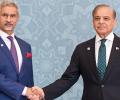
Shehbaz made the comments during a visit to the Kamra air base in the country's Punjab province where he interacted with officers and soldiers involved in the recent military confrontation with India.
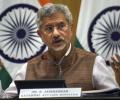
The last Indian external affairs minister to visit Pakistan was Sushma Swaraj. She had travelled to Islamabad in December 2015 to attend a conference on Afghanistan.
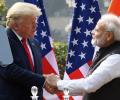
Prime Minister Narendra Modi and United States President Donald Trump on Monday vowed to work towards a 'trusted' partnership with a focus on boosting India-US cooperation in areas of trade, energy and defence in their first phone conversation since the American leader's inauguration last week.
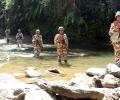
China's military has said it is willing to work with India to find a solution to the border issue, while also pushing for sound and stable defence ties. The statement comes after recent meetings between officials from both countries to normalize relations following a prolonged period of tension.
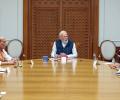
Shah briefed the prime minister on the attack and discussed the measures to be taken in its aftermath.
The United States on Thursday said it supports India's right to defend itself and its fight against terrorism as US Defence Secretary Pete Hegseth dialled Defence Minister Rajnath Singh amid rising tensions between India and Pakistan over the Pahalgam terror attack.
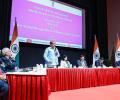
JD-U MP Sanjay Kumar Jha heads a diplomatic mission to Indonesia, Malaysia, South Korea, Japan and Singapore, to seek international cooperation after the Pahalgam attack while highlighting Pakistan's role in cross-border terrorism.
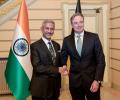
The era where nations thrived through rigid alignments is giving way to an age where the connective State defines power. For India, that era has arrived, points out Dr Nishakant Ojha.

In response to US criticism of India's oil imports from Russia, the Indian Army shared a 1971 news clip highlighting the US's role in arming Pakistan.
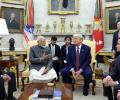
Trade, defence cooperation and regional strategy had long formed the backbone of India-US ties, but the latest rift shows how quickly those pillars can be shaken by personal grievances and political optics.
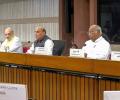
The Indian government briefed an all-party meeting on Thursday on the success of "Operation Sindoor", the retaliatory airstrikes against Pakistan following the Pahalgam terror attack. Top government functionaries and opposition leaders met for a second time in a fortnight amid rising tensions between India and Pakistan. The meeting was chaired by Union Home Minister Rajnath Singh and attended by several prominent leaders from various political parties. The government highlighted the strikes on nine terror targets in Pakistan and Pakistan-occupied Kashmir, including the Jaish-e-Mohammad stronghold of Bahawalpur and Lashkar-e-Taiba's base Muridke.
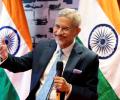
'The logic every one of our neighbours must realise is that working with India will give you benefits, and not working with India has a cost.'
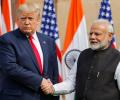
The China threat continues to resonate in the strategic partnership between India and the USA, points out Rup Narayan Das.

The CCS meet was held at the prime minister's Lok Kalyan Marg residence, a day after he held a meeting with the top military brass and accorded operational freedom to the armed forces on the "mode, targets and timing" of India's response to the April 22 attack that killed 26 people.

In a heinous terror attack, two Indians were killed while one was abducted in the Dosso region of Niger, as noted by the Indian Embassy in Niger.
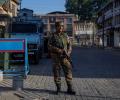
India has reached out to Denmark and other non-permanent members of the UN Security Council to apprise them of the Pahalgam terror attack and its cross-border linkages. External Affairs Minister S Jaishankar has spoken to his counterparts from several nations, conveying India's resolve to bring the perpetrators to justice. The outreach comes as India mulls options for responding to the attack, with Prime Minister Modi assuring the harshest response for the "perpetrators and conspirators." India has also received condolences and condemnations from world leaders, including US President Donald Trump and French President Emmanuel Macron.
Records stretching back to 1947 suggest a consistent strategy by Pakistan's military and intelligence apparatus, the Inter Services Intelligence (ISI), of using terrorism as a state policy against India.

The BJP flayed Gandhi for "echoing" Trump's "dead economy" jibe at India, calling it a "shameful" insult to the aspirations, achievements, and well-being of the people of the country.
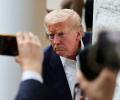
'We are a responsible nation, and would prefer to deal with sensitive issues with the maturity they deserve rather than take to social media.'
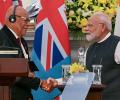
Fijian Prime Minister Sitiveni Rabuka discussed US tariffs on Indian goods with Prime Minister Narendra Modi, noting that "somebody is not very happy with you." The discussion occurred during Rabuka's visit to India to strengthen ties.

The Air Chief revealed information about India's damage to Pakistan's defence capabilities while addressing an event at the Hal Management Academy in Bengaluru on Saturday.

Congress leader Uttam Kumar Reddy said the country wanted to know whether any aircraft were downed during the conflict, especially in the wake of the CDS' "admission".
India has issued a strong warning to Pakistan against continuing its 'hateful' rhetoric and any potential misadventures, following recent nuclear threats and remarks from Pakistani leadership.

A big question mark is on whether Shashi Tharoor, who had led the delegation to the US among other countries, will be picked as speaker by the Congress, as the seasoned Lok Sabha member's enthusiastic endorsement of the government's action following the terror attack has soured his ties with his party.
'Saudi-Pak defence pact is to anchor the defence and security of Saudi Arabia and not Pakistan, per se, with Islamabad being the junior partner.'
What was the aim of Operation Sindoor? Why was the operation halted so soon? asks Lieutenant General Prakash Katoch (retd).
The poll is witnessing a direct contest between ruling NDA nominee C P Radhakrishnan and joint opposition candidate B Sudershan Reddy, with the BJP-led alliance having a clear edge in the poll necessitated due to the sudden resignation of Jagdeep Dhankhar.

Prime Minister Narendra Modi is expected to visit Japan and China starting around August 29. The visit to China would be his first after the Ladakh border standoff.
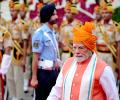
Prime Minister Narendra Modi will travel to China to attend the Shanghai Cooperation Organisation (SCO) summit, marking his first visit in over seven years. The visit signals a potential improvement in India-China relations after recent tensions.
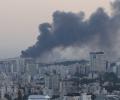
In an interaction with PTI Videos in New Delhi, Iran's deputy chief of mission to India Mohammad Javad Hosseini also said Americans should "put pressure" and bring the other side back to the negotiating table.
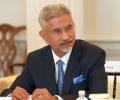
External Affairs Minister S Jaishankar says Operation Sindoor conveyed India's resolve to act against terrorism, following UN Security Council's call to bring Pahalgam attackers to justice.

External Affairs Minister S Jaishankar has said the recent confrontation between India and Pakistan was not just a mere conflict between two neighbours, but it was about combating terrorism, which will eventually come back to haunt the West.
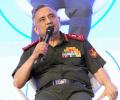
Chief of Defence Staff General Anil Chauhan on Saturday acknowledged losses of aircraft in India's recent military hostilities with Pakistan but dismissed as 'absolutely incorrect' Islamabad's claim of downing six Indian fighter jets.

Weeks before the Pahalgam attack, Munir said Pakistan will not forget the issue of Kashmir, asserting, "It was our jugular vein." His comments were trashed by India.

India's Foreign Secretary Vikram Misri said on Thursday that the choice of de-escalation is with Pakistan, as India only responded to the April 22 Pahalgam terror attack, which killed 26 people. He added that Pakistan has been escalating the situation with cross-border terrorism against India for decades.

US Secretary of State Marco Rubio claims President Donald Trump was instrumental in bringing about the cessation of hostilities between India and Pakistan, a claim India has consistently denied.
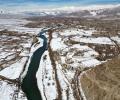
India has asserted that the Indus Waters Treaty with Pakistan will remain in "abeyance" until Islamabad "credibly and irrevocably" abjures support to cross-border terrorism. External Affairs Ministry spokesperson Randhir Jaiswal said that any bilateral talks with Islamabad will only be on vacation of illegally occupied territories of Kashmir by Pakistan. He also said that India is open to discussing the handing over of terrorists whose list was provided to Pakistan some years ago. India on April 23 announced a raft of punitive measures against Pakistan including suspension of the Indus Waters Treaty after the Pahalgam terror attack that killed 26 civilians.
